Hi-Lo
EasyFree
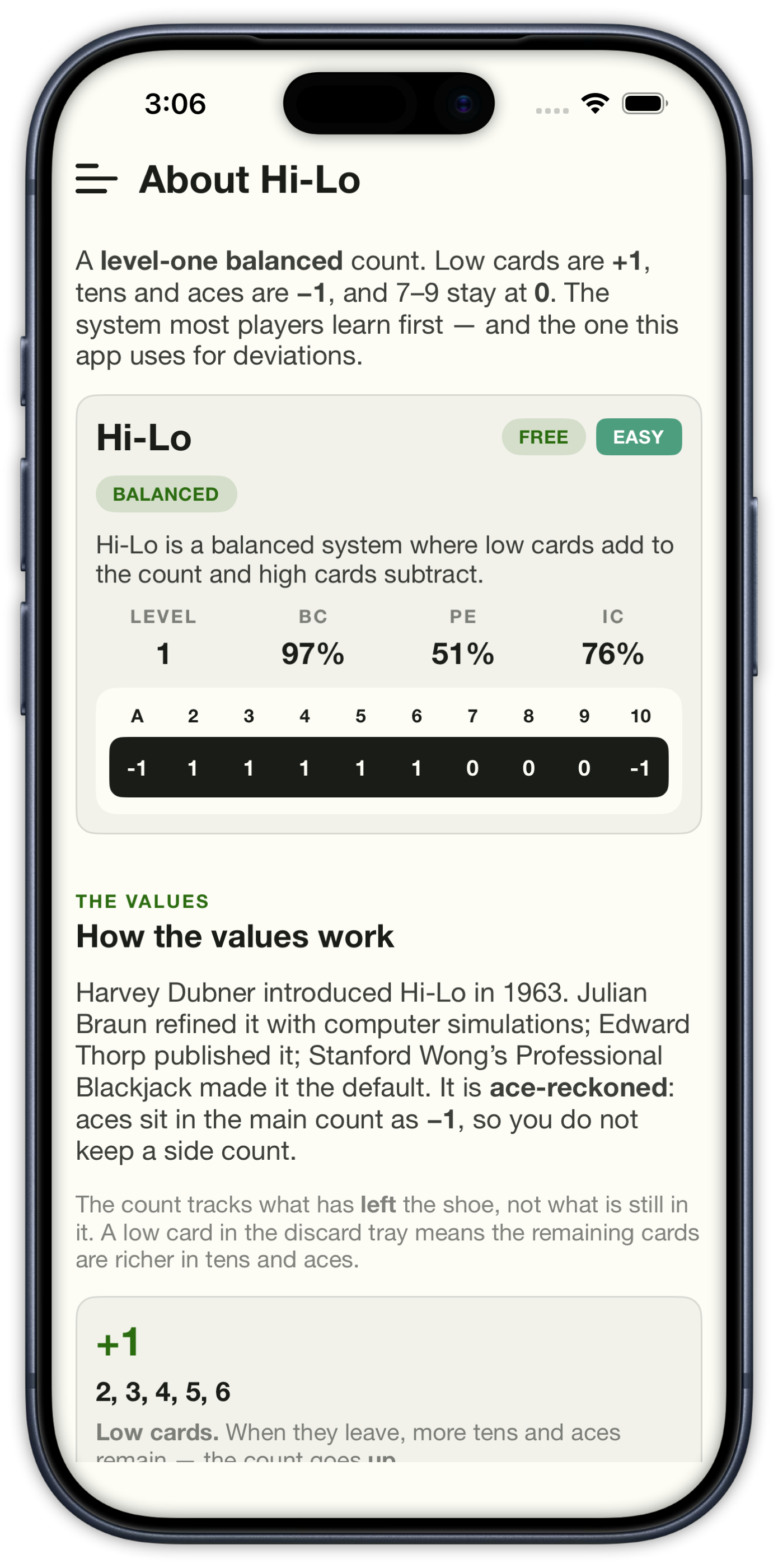
Hi-Lo is a balanced system where low cards add to the count and high cards subtract.
- Level
- 1
- BC
- 97%
- PE
- 51%
- IC
- 76%
| A | 2 | 3 | 4 | 5 | 6 | 7 | 8 | 9 | 10 |
|---|---|---|---|---|---|---|---|---|---|
| -1 | 1 | 1 | 1 | 1 | 1 | 0 | 0 | 0 | -1 |
Systems
A level-one balanced count. Low cards add one, tens and aces subtract one, and 7–9 stay at zero. The system most players learn first — and the one the app uses for deviations.
Hi-Lo
Hi-Lo is a balanced system where low cards add to the count and high cards subtract.
| A | 2 | 3 | 4 | 5 | 6 | 7 | 8 | 9 | 10 |
|---|---|---|---|---|---|---|---|---|---|
| -1 | 1 | 1 | 1 | 1 | 1 | 0 | 0 | 0 | -1 |
The values
Harvey Dubner introduced Hi-Lo in 1963. Julian Braun refined it with computer simulations; Edward Thorp published it; Stanford Wong’s Professional Blackjack made it the default. It is ace-reckoned — aces sit in the main count as −1 — so you do not keep a side count.
Card counting tracks what has left the shoe, not what is still in it. A low card in the discard tray means the remaining cards are richer in tens and aces. A high card in the tray means the opposite.
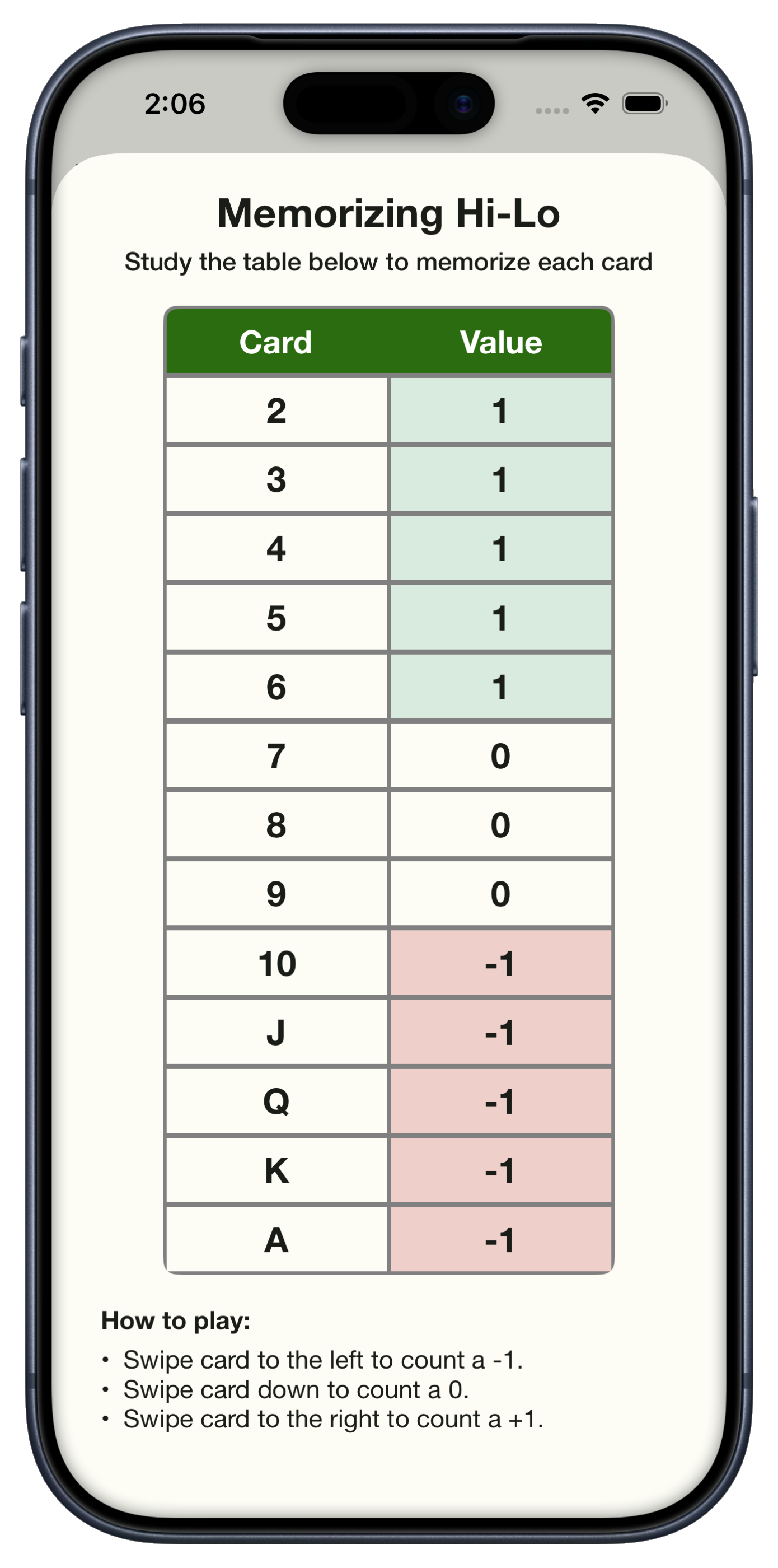
+1
2, 3, 4, 5, 6
Low cards. When they leave the shoe, more tens and aces remain — the count goes up.
0
7, 8, 9
Neutral. They barely change the remaining mix, so they do not move the count.
−1
10, J, Q, K, A
High cards. When they leave, the shoe is weaker for the player — the count goes down.
The math
Add the value of every card you see. That running total is the running count. Because Hi-Lo is balanced, a 52-card deck sums to zero: twenty low cards at +1, twenty high cards at −1, and twelve neutrals.
In a multi-deck shoe the running count still works, but the same +6 means more in a single deck than in six. Convert to true count: running count divided by remaining decks. Betting ramps and strategy indices are published against true count.
Efficiency
The locker in the app shows Level, BC, PE, and IC for every system. Those three percentages come from the same correlations used across counting literature — how well the values line up with betting, playing, and insurance.
BC
97%
How closely the count tracks betting advantage. Hi-Lo is a betting-first count — 97% is elite for a level-one system.
PE
51%
How well the count guides playing deviations. 51% is enough for the common indices without keeping an ace side count.
IC
76%
How well the count predicts a ten in the hole. Take insurance more often when the true count is high.
Hi-Opt I and Hi-Opt II trade some of that betting power for playing efficiency, and they leave aces out of the primary count. Hi-Lo keeps aces in, stays at three values, and is the count with the most published indices — including the deviations in Card Counting Coach.
In the app
Hi-Lo ships with the free app. Learn the values, keep a running count, then convert to true count. Switch systems any time from the locker — the same drills work with KO, Zen, Wong Halves, and the rest of the Pro set.
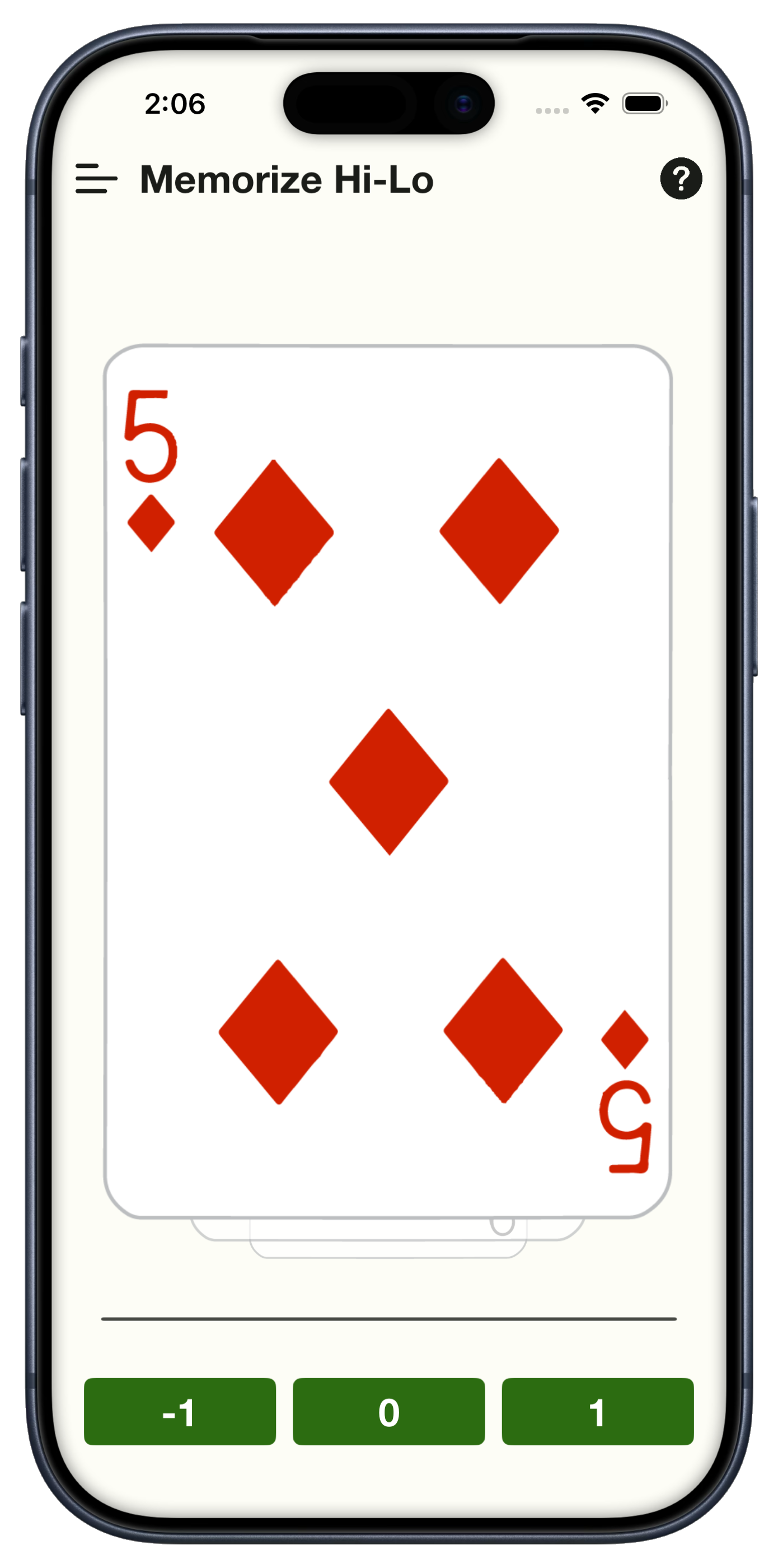
Drill the three values until 2–6, 7–9, and tens-plus-aces are automatic.
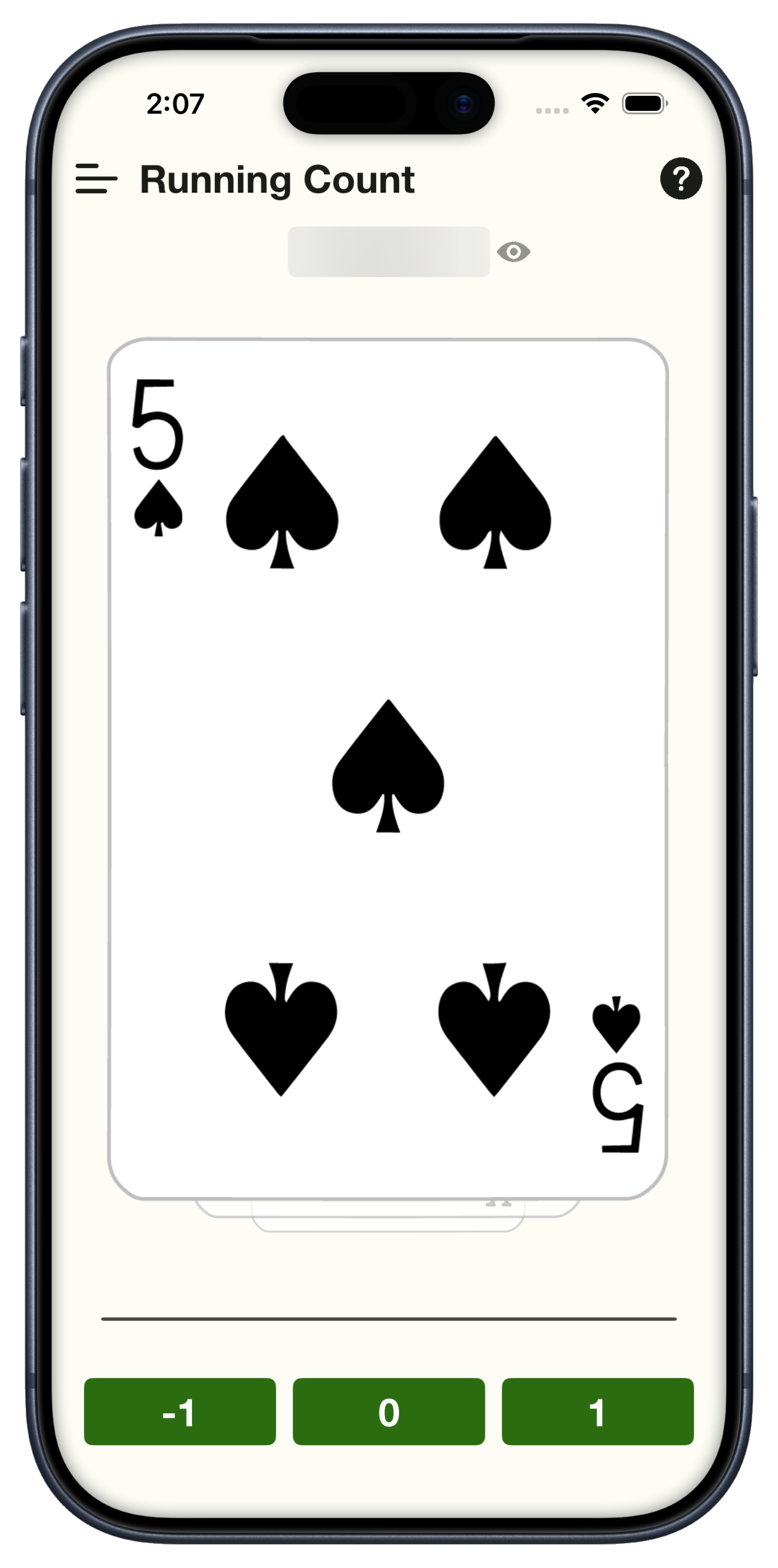
Add every card as it comes off the shoe. Start at 0. A full deck returns to 0.
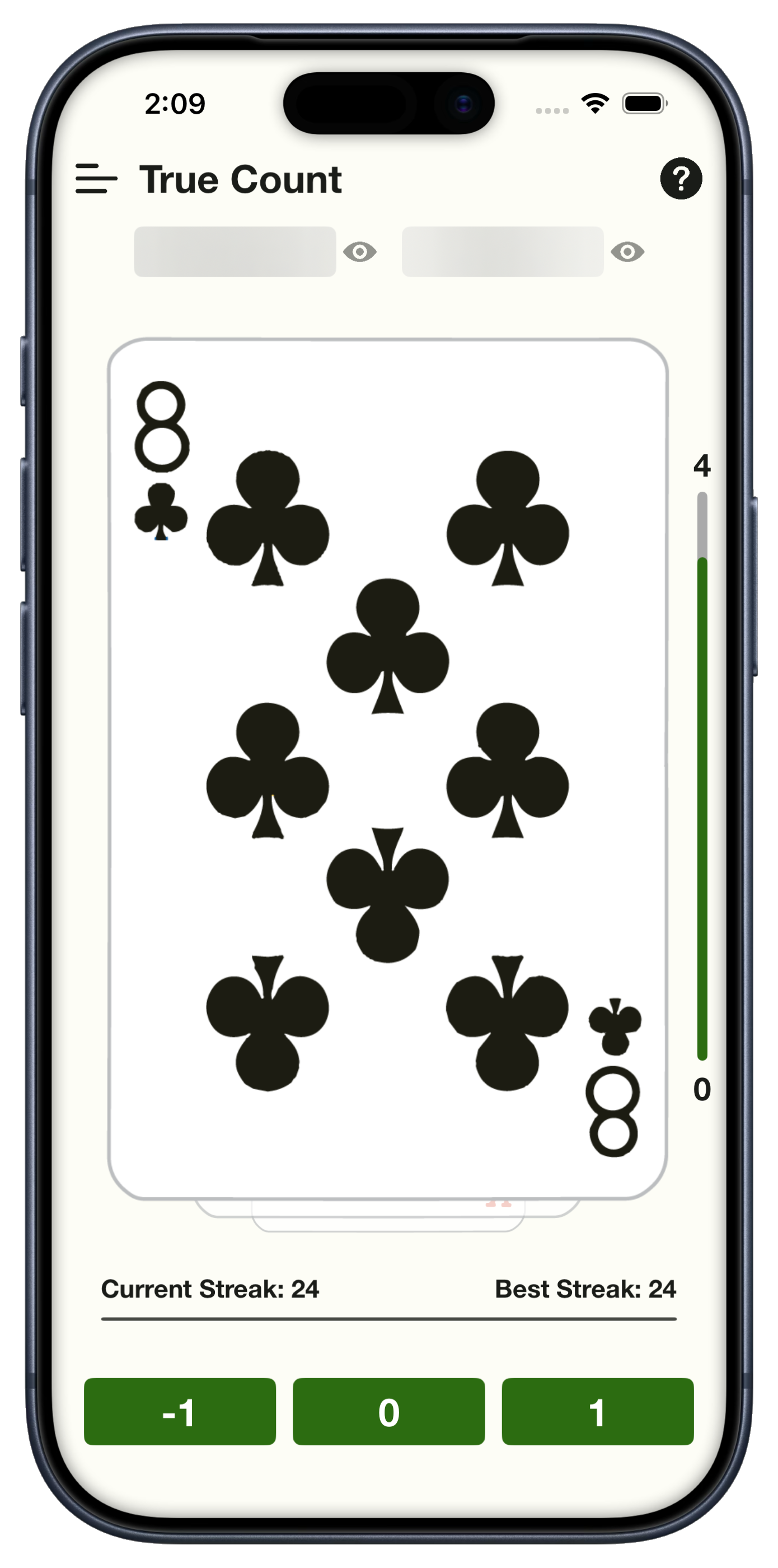
Divide the running count by remaining decks. Betting and deviations use this number.
Keep exploring
Features
Counting drills, strategy, session logs, live teams, and analytics — in one iPhone app.
Read more →Training
Running count, true count, speed drills, swipe practice, dealt-out shoes, and a full table.
Read more →Sessions
Start a live session, journal bankroll and tables, PIN-lock the screen, and review P/L after you walk.
Read more →Dashboard
Accuracy, streaks, personal records, and a tap-through of every recent drill so you know what to practice next.
Read more →Pro Mode
A one-time $9.99 purchase — extra systems, deviations, sessions, teams, and no ads.
Read more →Support
Email us for bugs and billing, or browse common questions about practice, Pro Mode, sessions, and teams.
Read more →Download Card Counting Coach. Hi-Lo is free — Memorize, Running Count, and True Count are ready when you are.